Hi, I'm Saffron!

Since I can remember, I have been fascinated with writing and delving deep into different worlds, broadening my imagination and challenging my perspective on the world. Whilst I write both fictional and analytical pieces, at my core I am a creator. As I work towards my dream of showcasing the worlds I have built since I was very small, I hope my works can show the potential as my ideas reach fruition. If you want to know more about my academic background or get in contact, use the navigation menus below.

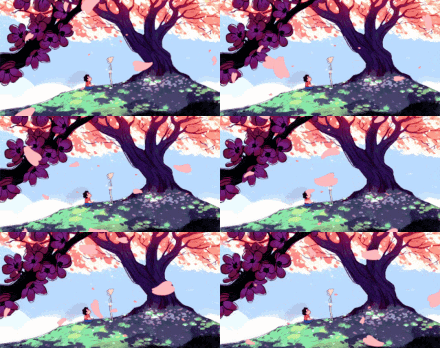
  • If you know me or have known me throughout my twenty five years of life, it’s a well-known fact that I love flower language and botanic symbolism. It’s difficult to trace back to exactly when I fell in love with this niche, outdated method of conversation…(oddly enough, I remember watching a sketch of this concept on ‘Horrible Histories’ when I was around secondary school age), but a few examples of my favourite uses of floral symbolism are the use of roses and hibiscus flowers in Steven Universe, the use of the Red Camellia in Soul Eater, the use of several flowers including Tulips, Sunflowers, Lillies of the Valley, and even Cacti in the Psychological Horror Game Omori, and the use of Oleanders in the song- well – Oleander by Mother Mother.
    Floriography particularly was popular in Victorian Britain, bouquets being used to pass messages or even sometimes as fashion. In ‘The Language Of Flowers’ (the earliest book being sourced in New York, 1834), the meanings of each flower are elaborated upon – including my own name, Saffron! Looking deeper into the symbolism of flowers, it fast predates this publication, however. Flowers have been used as symbols since at least Ancient Rome, being attributed to goddesses such as Flora and Venus, the former of which had a festival in which usually forbidden outfits would be permitted, and flowers had a place in the celebrations, as well as the nude human body. The amount of meaning that has been attributed to flowers is completely symptomatic of our relationship with the natural world and an appreciation for natural beauty that has transcended ages.

    So how does this connect to how I have written previously? I have found that a lot of the characters I work on have connections to plants that I admire in the natural world. My favourite flower for years has been the Oleander – its meaning being ‘warning’. It is not medicinal like many other plants and flowers- in fact, it is poisonous and has caused several deaths when it has been accidentally consumed. It has a pleasant appearance which almost juxtaposes the amount of fear that surrounds it. I have always been interested in the idea of a character that looks harmless, yet an air of warning stagnates around them.

    I believe there is a place in the literary landscape – now more than ever – to connect the natural world directly to the characters and stories that we write. As I write this from sunny England, where the ground is turning yellow from lack of rainfall and the blistering heat we’re all struggling through, and where the focus on technology is actively draining resources from the world we are actively pushing into an industrial nightmare, I picture a world where people and nature aren’t so seperated. To be critical of our advantages and disadvantages over the simplistic lifeforms we still hold to be truly beautiful, and have admired throughout the entirity of our history on this planet. Ecodystopias and utopias have been essential in my exploration of the genre, and I hope that I can explore nature not just through world building, but also character growth and development as I analyse the traits of nature and begin seeing similarities in psychological phenomenons like survival instincts and competitive habits.
  • My masters degree wrought a challenging time in my life both academically and personally. At the time, I had rerealised my adoration for the Romantic Era as we were studying prominent figures in the literary and political field. Namingly, Wordsworth had particularly inspired me as I read his ‘Preface to Lyrical Ballads’ during a tutorial. Whilst this drew on the particular political beliefs at the time of literature feeling too complex and elaborate and therefore inaccessible to the lower class, it also awoke a sense of appreciating the beauty of nature for how simplistic and unapologetic it is in its most natural form; overgrown, gargantuan, beyond one simple understanding. As I write this, currently away from the city life of Coventry in a small town in Norwich, I find I have once again lost this appreciation in the chaos of what is everyday life and find myself compelled to…well, walk through fields and lose myself in them, temporarily.

    In this dissertation I not only cover the political landscape of the late 18th- mid 19th century, but also the threats of the time and how Keats particularly was so envigored by nature, he escapes the mundane into the extraordinary, seeking solace in the realm of his imagination, accomponied by gods of long ancient eras, voices of heavenly figures, and of course, nature. I have reread it recently to remind myself of the inspiration Keats is to me. I hope you find some enjoyment in my exploration of the era and his works.

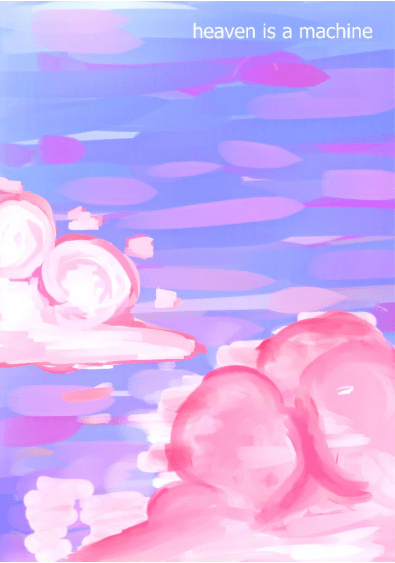
  • For my first post, I thought I’d showcase my first piece of short story writing, ‘Heaven is a Machine’. More than anything, it is a commentary on how AI and slowly taking human emotions and creation away could lead to a world completely out of touch with art and feeling. It is also about war and tragedy, and how it can completely obscure our vision of the future.

    When in my final year of my undergraduate degree, I had been studying a module in Dystopian and Utopian literature. From when I had been introduced to the genre in my teen years, I was completely spellbound by the style of writing. Atwoods ‘The Handmaid’s Tale’ and Butlers ‘The Parable of the Sower’ were two particular works that I was particularly caught by, both of them being futuristic fiction about trying to escape one place in hopes of a better future. I had never been particularly interested in Utopian fiction until I read Morris’ ‘News from Nowhere’, which I particularly enjoyed. I decided to make a short story set in a future in which earth is no longer habited by anything except a few stragglers, and the main character journeys to earth in hopes of obtaining some answers into her own identity.

    AI is everywhere now. It always has been, I suppose, but now it’s in our faces at all times. From family members sending some informative or funny AI generated video to their children and grandchildren, to humanoid and non-humanoid robots alike living in our streets, our homes, and talking to us every day. I’ve always toyed with the idea of robots trying to learn more about their predecessors through trying to ‘code in’ emotion, but rejecting it once it causes a problem. The main character, Olive, is not human, but feels like one. She is claustrophobic in her tiny wired body, and her human core is winning her over, much to the dismay of Petunia, the overlord of ‘Heaven’.

    Without much futher ado, I’d encourage you to read the short story and the critical analysis afterwards. I was very pleased to write this and obtain a grade of 1:1 (80%), but also to have this published to the Coventry Degree Show 2022 as part of the Humanities subcategory. Please enjoy!